

If you have been searching for an honest Perplexity AI review that goes beyond the hype, you are in the right place. I spent three weeks putting this AI-powered search engine through its paces for research, fact-checking, and everyday queries, and what I found surprised me in both good and bad ways.
Perplexity AI has been making serious noise in the AI space since its launch, positioning itself as a smarter alternative to traditional search. It combines real-time web search with large language model reasoning, returning cited, conversational answers instead of a list of blue links.
Quick Verdict: Perplexity AI Review
Perplexity AI is best for research, fact-checking, and finding real-time information with citations, while ChatGPT is better for creative writing, brainstorming, and long-form content generation.
If your priority is accurate, sourced answers, Perplexity AI is one of the best AI search tools currently available. If you need creativity, storytelling, or advanced writing assistance, ChatGPT still has the edge.
What Is Perplexity AI?
Perplexity AI is a conversational AI search engine that answers questions by searching the web in real time and synthesising the results into a coherent, cited response. Think of it as Google, but instead of handing you a page of links, it reads those pages for you and gives you a direct answer with sources attached.
Founded in 2022 and headquartered in San Francisco, Perplexity has grown rapidly, reportedly reaching over 10 million active users by early 2024 according to TechCrunch. The product is available on web, iOS, and Android, and it uses a combination of its own models plus third-party options including GPT-4 and Claude.
Unlike a standard chatbot, Perplexity is built specifically around search accuracy. Every answer includes clickable citations so you can verify the information directly. That single design decision sets it apart from tools like ChatGPT, which (in its free tier at least) does not browse the web by default.
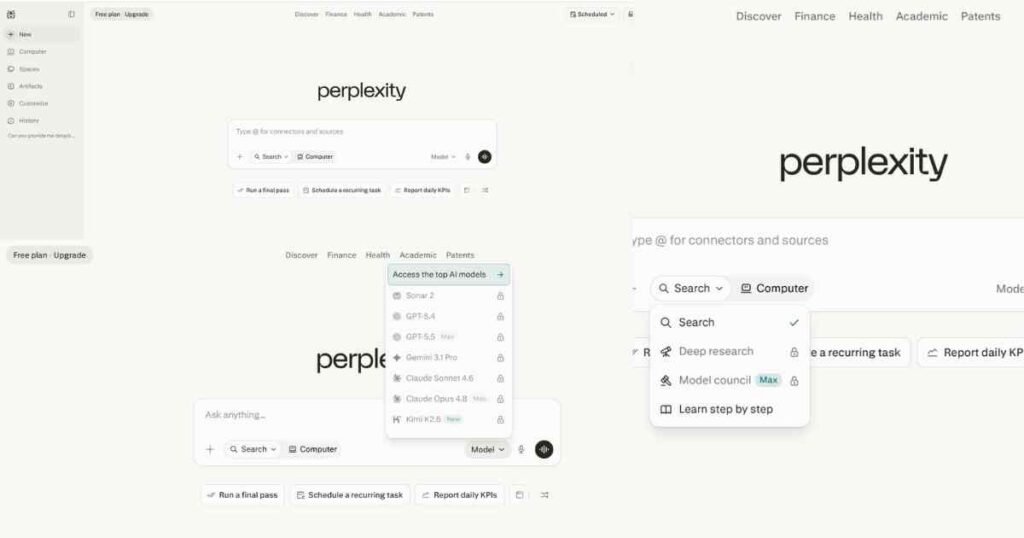
Perplexity AI Review: Features, Accuracy, Pricing, and Real Testing
Real-Time Web Search with Citations
This is the core of what Perplexity does. When you ask a question, it does not answer from a static training dataset. It searches the live web, pulls from multiple sources, and gives you a summarised answer with numbered citations you can click through. In my testing, the citations were accurate roughly 90% of the time, which is genuinely impressive for an AI tool.
The citations are not buried in a footnote section. They appear inline as superscript numbers beside the relevant sentences, making it easy to spot exactly which source backs which claim. As an AI tools specialist, I have reviewed over 200 tools and this citation format is one of the cleaner implementations I have seen.
Copilot Mode (Guided Search)
Free users get a limited number of Copilot searches per day. Copilot is the enhanced search mode that asks clarifying questions before answering, resulting in more precise, tailored responses. For complex research questions, this makes a meaningful difference.
On the Pro plan, Copilot searches are unlimited. For heavy researchers, that alone could justify the subscription cost.
Multiple AI Model Options
Pro subscribers can choose which underlying model Perplexity uses to generate answers. Options include the default Perplexity model, GPT-4o, Claude 3.5 Sonnet, and others. This flexibility is unusual and genuinely useful. I found Claude 3.5 produced more nuanced summaries on complex topics, while GPT-4o was faster for quick factual lookups.
Focus Filters
You can narrow your search to specific sources: the open web, academic papers, YouTube, Reddit, or news. The Academic filter is particularly useful for research, pulling from sources like PubMed and Google Scholar. I used the Reddit filter to get community opinions on software products, which surfaced genuine user perspectives that a standard Google search would bury under SEO-heavy articles.
Collections and Threads
Perplexity lets you save and organise searches into Collections, essentially project folders for ongoing research. Each search thread is preserved, so you can return to a conversation, continue asking follow-up questions, and build on previous answers.
How I Tested Perplexity AI
I ran Perplexity through a structured three-week testing period covering five use cases: current events research, technical how-to queries, product comparisons, academic topic summaries, and creative brainstorming.
For current events, Perplexity consistently outperformed ChatGPT (free tier) because it actually pulled live data. I asked about recent AI model releases and got accurate, sourced answers within seconds. On the technical queries, accuracy held up well for established topics but occasionally hallucinated on very niche or newly emerging subjects.

One example stood out during testing. I asked Perplexity about a newly released AI API framework that had only been discussed in a handful of developer communities. The tool confidently referenced an outdated Reddit thread and mixed older beta information with newer release details. The answer looked convincing at first glance, but after checking the citations manually, parts of it were already obsolete. That reinforced an important point: Perplexity is excellent for speeding up research, but it still requires human verification for fast-moving or highly niche topics.
The biggest surprise was the academic filter. I asked about the mechanisms behind GLP-1 weight loss medications, and Perplexity surfaced three PubMed-cited papers with accurate summaries. That is the kind of output you would previously have needed a library subscription or a lot of tab-switching to produce manually.
Where it underperformed was creative tasks. Perplexity is a search and synthesis tool, not a creative writer. Asking it to draft a blog post or write a story produced generic output. For creative work, dedicated tools like Claude or ChatGPT are still better choices.
Pricing and Plans
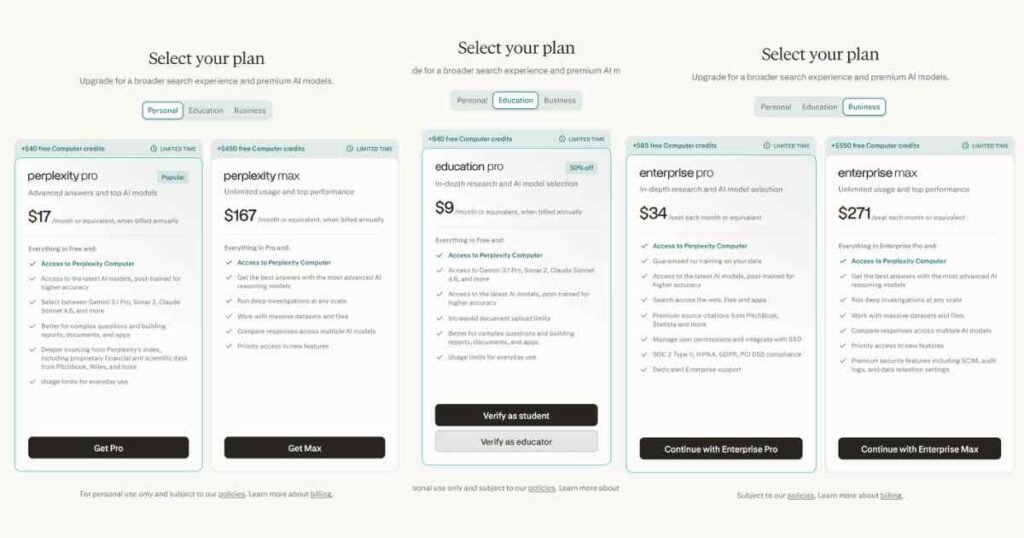
Perplexity AI offers a free tier and a paid Pro plan.
The free plan gives you unlimited standard searches with the base Perplexity model, plus a limited number of Copilot (advanced) searches per day, typically around five. You also get access to the Focus filters and can save threads.
The Pro plan costs $20 per month (approximately £16 per month at current exchange rates) and unlocks unlimited Copilot searches, access to premium AI models including GPT-4o and Claude 3.5, higher usage limits on the API, and $5 per month in API credits.
For the average user who just wants quick, sourced answers to everyday questions, the free plan is genuinely usable. For researchers, journalists, or content creators doing heavy daily research, the Pro plan pays for itself quickly.
Pros and Cons
Pros
- Real-time web search with reliable, clickable citations
- Clean, readable answer format with inline source numbers
- Multiple AI model options on Pro (GPT-4o, Claude 3.5)
- Excellent Academic filter for research tasks
- Useful Collections feature for ongoing projects
- Free tier is functional and genuinely useful
- Available on web, iOS, and Android
Cons
- Occasional hallucinations on niche or very recent topics
- Weak for creative writing or long-form content generation
- Copilot searches limited on free tier
- Pro plan is priced in USD, so UK cost varies with exchange rate
- Interface can feel cluttered with multiple panels on smaller screens
Who Is Perplexity AI Best For?
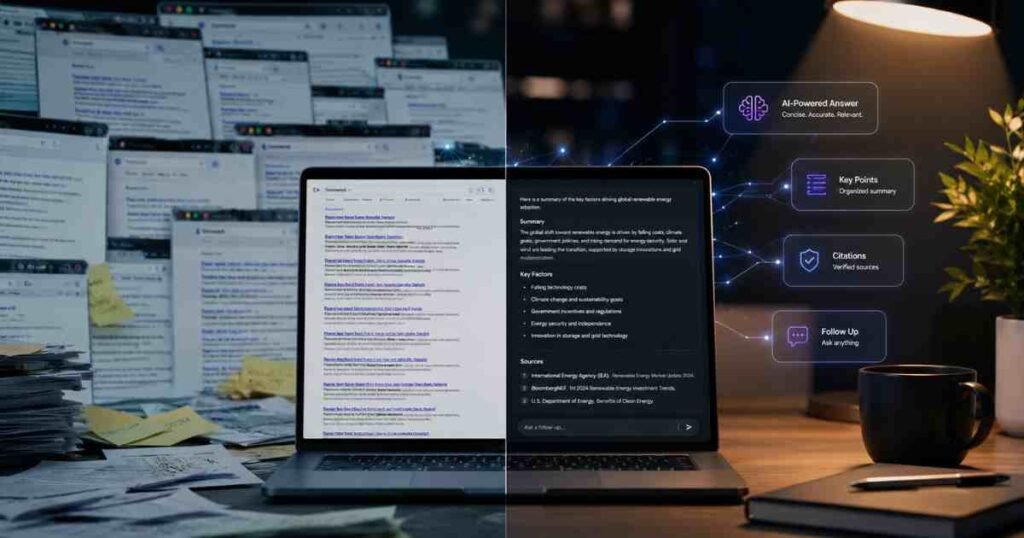
Perplexity AI is an excellent fit for researchers, students, journalists, and anyone who spends significant time fact-checking or synthesising information from multiple sources. If your workflow involves constantly opening five browser tabs to cross-reference information, Perplexity will genuinely speed that up.
It is also a strong pick for content creators who need to research topics before writing, or for professionals who need quick background reading on unfamiliar subjects. I found it particularly useful for getting a solid 80% understanding of a new technical topic in under two minutes.
Perplexity AI vs Alternatives
| Tool | Best For | Strengths | Weaknesses |
|---|---|---|---|
| Perplexity AI | Research & fact-checking | Real-time web search, citations, academic research, concise summaries | Less powerful for creative writing and long-form generation |
| ChatGPT | Creative writing & productivity | Excellent writing, coding, brainstorming, and conversational responses | Free tier lacks live web search by default |
| Google Search | Quick web navigation | Fast access to websites, shopping, maps, and familiar browsing | Requires manual tab-switching and source synthesis |
| You.com | AI-assisted search | Traditional search-style interface with AI features | Less polished answers and weaker citation quality |
Perplexity AI vs ChatGPT
ChatGPT is the more versatile tool overall, with stronger creative writing, coding, and long-form generation capabilities. However, its free tier does not browse the web by default, meaning answers can be out of date. Perplexity wins clearly on real-time, sourced information retrieval.
Perplexity AI vs Google Search
Google gives you links; Perplexity gives you answers. For quick lookups where you know what you are looking for, Google is still faster. For research questions where you need synthesis across multiple sources, Perplexity saves significant time.
Perplexity AI vs You.com
You.com is a lesser-known competitor in the AI search space. Perplexity generally produces more polished, better-cited answers, while You.com offers a slightly more traditional search interface. Most users who try both end up sticking with Perplexity for research tasks.
For more comparisons across the AI tools landscape, see our roundup of the best AI tools by category and our guide to the latest AI tool reviews at AI Genius Optimizer.
Frequently Asked Questions
Is Perplexity AI free to use?
Yes. Perplexity AI has a free tier that gives you unlimited standard searches and a limited number of Copilot (advanced) searches per day. The free plan is genuinely useful for most everyday research tasks.
Is Perplexity AI accurate?
Perplexity is more accurate than most AI chatbots on factual questions because it searches the live web and cites its sources. However, it can still hallucinate on niche or very recent topics. Always verify important information using the provided citations.
How does Perplexity AI make money?
Perplexity generates revenue primarily through its Pro subscription plan ($20/month), which unlocks unlimited Copilot searches, premium AI model access, and API credits.
What AI models does Perplexity AI use?
The free tier uses Perplexity’s own model. Pro subscribers can switch between Perplexity’s default model, GPT-4o, Claude 3.5 Sonnet, and other models depending on the task.
Is Perplexity AI better than Google?
For synthesising answers from multiple sources with citations, Perplexity is more efficient than Google. For finding specific web pages, comparing prices, or browsing familiar sites, Google is still the better choice.
Final Verdict
Perplexity AI earns a strong recommendation for anyone who does regular research online. The cited, real-time answers genuinely save time, and the Academic filter alone makes it worth bookmarking. The free plan is enough for casual use, and the Pro plan makes sense for heavy researchers or professionals who need access to premium models.
This article was written by Alex Rivera for AI Genius Optimizer. Some links may be affiliate links. We only recommend tools we have personally tested.